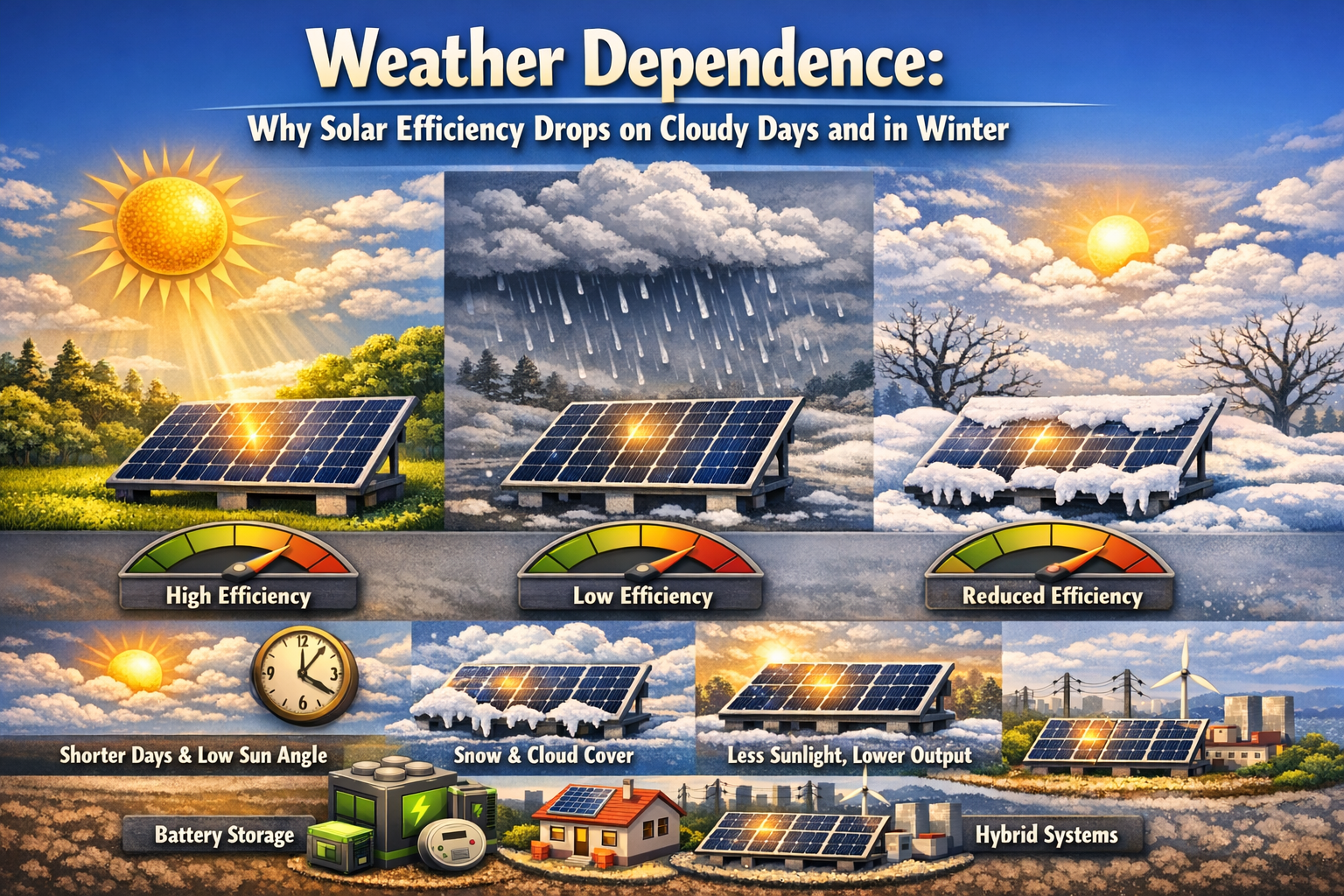
Solar energy has become one of the most promising renewable energy sources in the world. With its ability to generate clean electricity directly from sunlight, it offers a sustainable alternative to fossil fuels. However, like any technology, solar power has its limitations. One of the most significant challenges is its dependence on weather conditions. Cloudy skies, shorter winter days, and seasonal variations in sunlight can all affect how much energy solar panels produce. Understanding these limitations is crucial for homeowners, businesses, and policymakers who are considering solar investments.
☀️ How Solar Panels Work
Solar panels rely on photovoltaic (PV) cells, which convert sunlight into electricity. The more direct sunlight they receive, the more electricity they generate. When skies are clear and the sun is high, panels operate at peak efficiency. But when clouds block or scatter sunlight, the amount of solar radiation reaching the panels decreases, leading to lower energy output. Similarly, during winter, the sun’s angle is lower, daylight hours are shorter, and weather conditions are often less favorable, all of which reduce efficiency.
🌥️ Cloudy Days and Solar Output
On cloudy days, solar panels can still generate electricity, but at a reduced rate. Depending on the thickness of the cloud cover, output may drop by 50–80% compared to sunny conditions. Interestingly, some types of clouds can scatter sunlight in a way that allows panels to capture diffuse radiation, meaning they don’t stop working entirely. Modern solar technology has improved in this regard, but the reduction is still significant. For regions with frequent cloudy weather, this variability must be factored into energy planning.
❄️ Winter Challenges
Winter presents a different set of challenges:
- Shorter Days: With fewer daylight hours, panels have less time to generate electricity.
- Lower Sun Angle: The sun sits lower in the sky, reducing the intensity of solar radiation.
- Snow and Ice: In colder climates, snow accumulation can cover panels, blocking sunlight entirely until cleared.
- Temperature Effects: Interestingly, solar panels often perform better in cooler temperatures, but the lack of sunlight outweighs this benefit.
For countries in northern latitudes, winter can reduce solar output by as much as 40–60% compared to summer months. In contrast, regions closer to the equator, such as Pakistan, experience less seasonal variation, making solar more reliable year-round.
⚡ Solutions to Weather Dependence
While weather dependence is a real challenge, several solutions help mitigate its impact:
- Battery Storage
Energy storage systems allow excess electricity generated on sunny days to be stored and used during cloudy periods or at night. Lithium-ion batteries are the most common, but newer technologies are emerging. - Net Metering
Many countries, including Pakistan, have policies that allow households to sell excess electricity back to the grid. This means that during sunny months, users can offset their bills and draw from the grid during cloudy or winter days. - Hybrid Systems
Combining solar with other energy sources, such as wind or traditional grid electricity, ensures a consistent supply. Wind energy often complements solar, as windy conditions can occur when skies are cloudy. - Panel Orientation and Tracking Systems
Adjusting the angle of panels or using solar trackers that follow the sun’s movement can maximize exposure, especially during winter when the sun is lower. - Improved Technology
Advances in PV cells, such as bifacial panels that capture sunlight from both sides, and thin-film technologies, are helping improve efficiency under diffuse light conditions.
🌍 Regional Perspective: Lahore and Beyond
In Lahore and much of Pakistan, solar energy is particularly promising because the region enjoys abundant sunlight for most of the year. While winter and monsoon seasons bring some reduction in efficiency, the overall solar potential remains high. For households and businesses, rooftop PV systems combined with net metering provide a cost-effective solution. Large-scale solar farms are also being developed to meet growing energy demands. Compared to northern countries, Pakistan’s seasonal dips are relatively minor, making solar a reliable choice.
✅ Conclusion
Solar energy’s dependence on weather is both a challenge and an opportunity. On one hand, cloudy days and winter months reduce efficiency, making solar less predictable than fossil fuels. On the other hand, technological innovations, storage solutions, and smart policies are steadily overcoming these limitations. For regions with strong sunlight, like Lahore, solar remains one of the most practical and sustainable energy options. The key is to plan for variability, integrate complementary technologies, and continue investing in innovation.
By acknowledging weather dependence and addressing it with smart solutions, we can ensure that solar energy fulfills its promise as a cornerstone of a clean, renewable future.
Leave a Reply